
Golf is – and remains – an Environmental Benefit
Updated: Jul 28
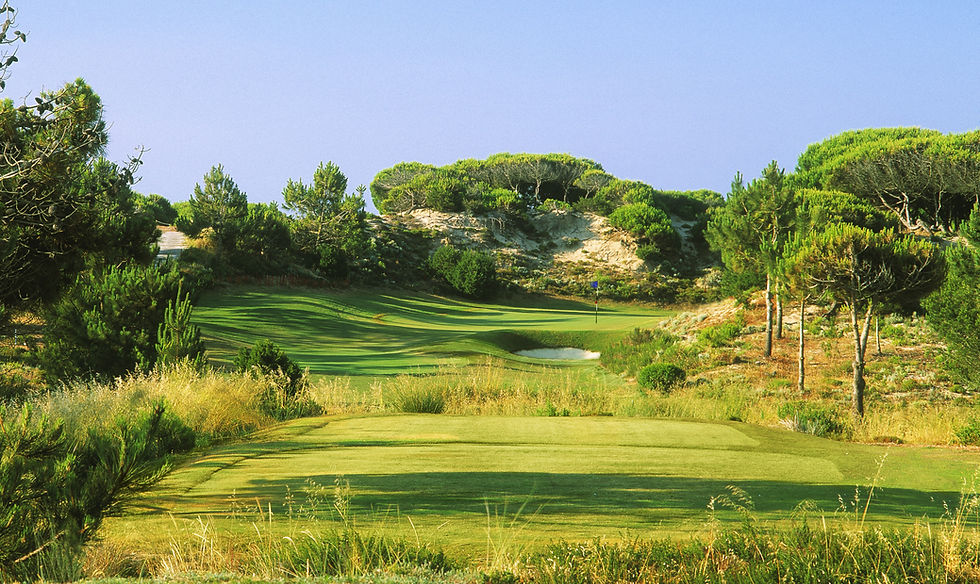
Few topics in golf generate as much discussion as the environmental impact of golf courses. When properly designed, managed and maintained, golf courses can provide significant environmental benefits to their surrounding communities.
An overlooked fact is the relatively small amount of land occupied by golf courses. Agriculture and forests account for approximately 70-75 percent of the total land area in the United States. Golf courses, by comparison, represent less than one-tenth of one percent of the nation’s land area. While golf courses often receive attention for their resource use, their footprint is remarkably small when viewed within the broader context of land management.
At Hills • Forrest • Smith, our commitment to serving the environment dates to the early 1970s and 80s in southwest Florida with the creation of clubs such as The Wilderness, Pelican Bay and Bonita Bay. We designed the world’s first Audubon Signature Sanctuary course at Collier’s Reserve in Naples, Florida, in 1994. They have strenuously maintained their bi-annual certification from Audubon without fail since that time.
We also designed Europe’s first Audubon Signature Sanctuary course at Oitavos Dunes in Portugal in 2001. It is ranked as one of the Top 100 courses in the world. The first Audubon Signature Sanctuary course in Mexico was also designed by us in 2009, in the city of La Paz on the Baja California peninsula. The strong environmental preservation and enhancement emphasis is highly evident at each of these three “signature” courses.
Golf courses also play an important role in supporting wildlife and biodiversity. The average 18-hole golf course contains more than 23 acres of natural areas, including forests and grasslands, along with nearly six acres of ponds, lakes and other water features. These areas provide valuable habitat for a wide variety of birds, mammals, amphibians and aquatic species. In many developed regions, golf courses serve as important green spaces where wildlife can thrive despite increasing urbanization.
Bird populations, in particular, benefit from the habitat opportunities created by golf courses. Naturalized areas, native plantings and water features offer nesting, feeding and migration opportunities for numerous bird species. These habitats can be especially valuable in suburban and urban environments where natural open space is limited.
Water management is another area where golf courses contribute positively. Wetlands, ponds and vegetated buffers incorporated into golf course designs help filter runoff, reduce flooding and improve water quality. Dense turfgrass systems and naturalized areas slow stormwater movement, allowing water to infiltrate the soil and recharge groundwater supplies. In many cases, golf courses can improve the quality of water flowing through a property before it reaches downstream waterways.
Water conservation has also become a major priority throughout the golf industry. Organizations such as Audubon International have worked closely with golf courses through programs focused on environmental planning, integrated pest management, wildlife enhancement, energy planning and water conservation. As a result, golf courses have significantly improved irrigation efficiency over the past two decades, with water use declining by approximately 19 percent between 2005 and 2020.
The golf industry continues to pursue additional opportunities for environmental stewardship. Many facilities are converting maintained turf areas to native vegetation, preserving threatened plant and animal species, enhancing stormwater management systems and transitioning to electric-powered maintenance equipment. Others are opening portions of their properties for community access, educational programs and environmental outreach initiatives that strengthen relationships with local residents.
No land use is without environmental impacts, and golf is no exception. Yet modern golf courses are increasingly demonstrating that recreation and environmental responsibility can coexist. Through thoughtful design, sustainable management practices and ongoing conservation efforts, golf courses can provide meaningful environmental benefits while serving as valuable community assets for generations to come.


